
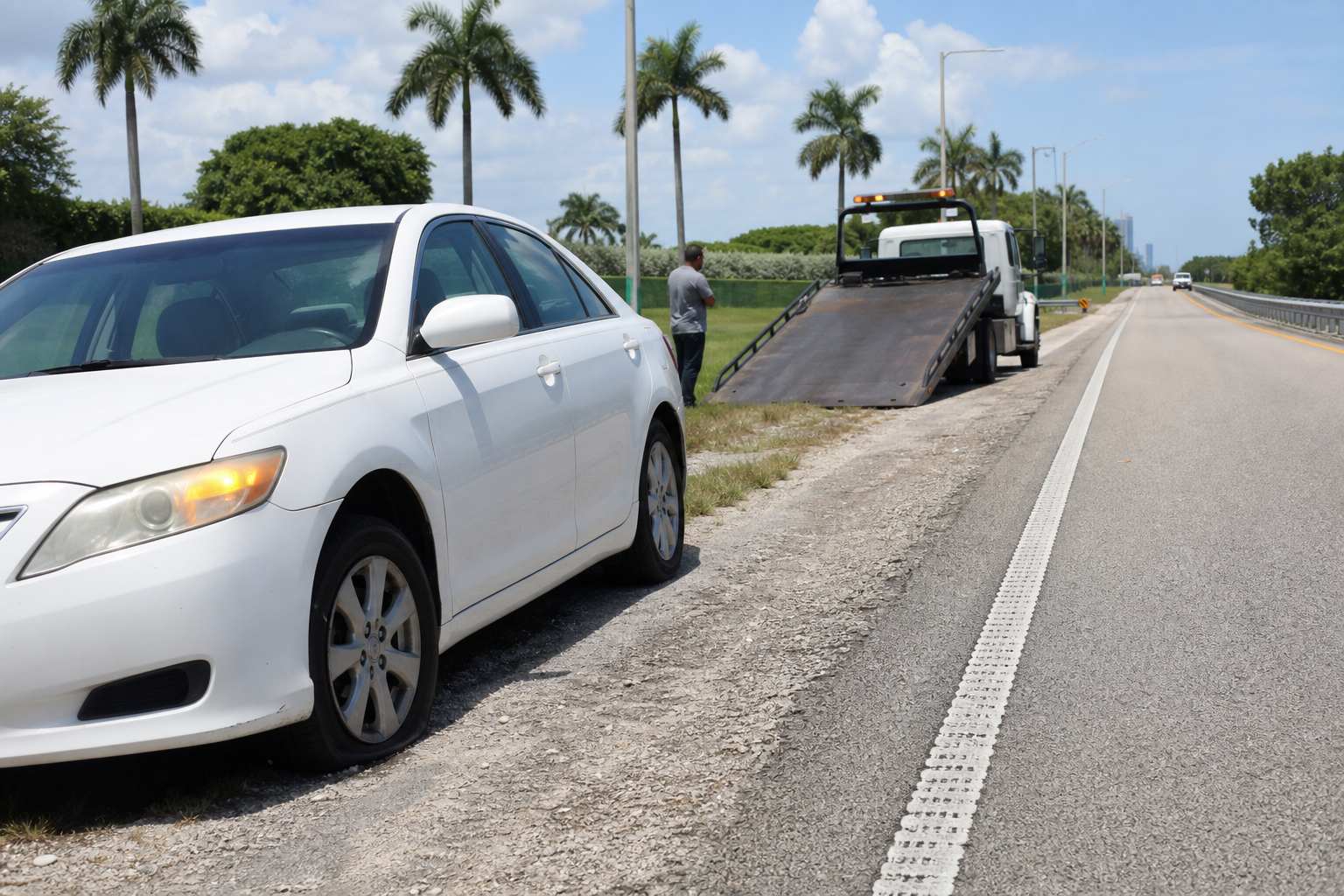
If the tire-pressure warning is followed by pulling, vibration, thumping, or a visibly low tire, stop driving as soon as you can reach a place separated from moving traffic. Turn on the hazard lights, slow without abrupt steering or braking, and prioritize a safe stopping position over saving the tire. If the vehicle is disabled in an active travel lane or occupants face an immediate collision risk, contact emergency services first.
Risk signals: decide whether the warning has become a driving hazard
A tire-pressure light alone does not reveal how quickly air is escaping. The vehicle's behavior provides the more urgent clues. Treat any of the following as a reason to stop rather than continue toward home, a fuel station, or a repair facility:
- Steering begins pulling to one side.
- A rhythmic thump, slapping sound, or new vibration appears.
- The vehicle feels unstable during gentle steering inputs.
- One corner of the vehicle sits visibly lower.
- The tire sidewall is folded, bulging, cut, or touching the pavement.
- You hear air escaping or see an object embedded in the tire.
- The warning returns soon after air was added.
In West Palm Beach, the roadside decision should account for traffic exposure as seriously as tire condition. A technically usable spare does not make a tire change safe if passing vehicles are close, the car is difficult to see, or there is no stable space to work. Drivers elsewhere in Palm Beach County should use the same test: can approaching traffic see the disabled vehicle early, and can assistance occur without someone standing in or next to a travel lane?
If handling still feels normal and the tire does not appear low, move to a safe location before checking it with a gauge. Compare the reading with the vehicle manufacturer's cold-tire pressure on the driver-door placard or in the owner's manual. Do not use the maximum pressure molded into the tire sidewall as the target. After driving, the tires may be warm, so do not release air merely to make a warm reading match the cold specification.
Safe actions: protect people first, then choose the service
1. Improve the vehicle's visibility without entering traffic
Keep the hazard lights on. Avoid walking behind the vehicle or along its traffic-facing side to inspect the tire. Do not place warning devices if doing so requires entering an active lane or crossing close to passing vehicles. Tell the service dispatcher that visibility or traffic clearance is limited so the provider can evaluate the safest assistance option.
2. Check only from a protected position
If there is enough separation from traffic, look for a collapsed sidewall, torn rubber, wheel damage, or a second low tire. A quick visual check is enough; reaching beneath the vehicle or removing the wheel is not. If inspection cannot be done without traffic exposure, describe the warning light and driving symptoms when requesting roadside assistance.
3. Match the response to the roadside conditions
Roadside tire help may be appropriate when the vehicle is completely outside moving traffic, the ground is firm and level enough for safe lifting, and a usable spare and required equipment are present. A technician can then assess whether flat tire service is practical at that location.
Towing is the better handoff when there is no usable spare, more than one tire is affected, the wheel appears damaged, the tire cannot hold air, or the location is too exposed for a wheel change. A low-clearance vehicle, a car that cannot roll normally, or uncertainty about additional damage may also call for flatbed towing rather than attempting to drive.
Emergency services come first when the disabled vehicle remains in an active travel lane or occupants face an immediate collision threat. Once the immediate traffic danger is being addressed, arrange towing and give the dispatcher a precise description of the vehicle's position and visibility.
Avoidable mistakes that turn a pressure warning into a larger problem
- Driving “just a little farther” on a visibly low tire. Continued movement can cause the tire to separate or allow the wheel to contact the pavement.
- Stopping at the first available spot without checking the sightline. A wider, more visible location may be safer if the vehicle is still controllable and can reach it without continued travel on a collapsing tire.
- Braking or steering sharply. A rapidly deflating tire already reduces stability; abrupt inputs can make the vehicle harder to control.
- Using the sidewall maximum as the inflation target. The correct reference is the cold-tire specification on the driver-door placard or in the owner's manual.
- Crawling under the vehicle or working on the traffic-facing side. Tire damage is secondary to exposure from passing vehicles.
- Assuming a compact spare solves every situation. The spare may be missing, underinflated, incompatible with the damaged position, or unsafe to install where the car stopped.
- Leaving the service provider to guess where the car is. Share the vehicle description, travel direction, nearby identifying features, whether all wheels roll, and whether the car is fully outside traffic.
Decision checklist: roadside tire service, towing, or emergency help?
Call emergency services now if:
- The vehicle is stopped in an active travel lane.
- Approaching traffic may not see the vehicle in time.
- Occupants face an immediate collision risk.
Request roadside tire service if all of these are true:
- The car is completely separated from moving traffic.
- There is adequate visibility and stable working space.
- A usable spare appears to be available.
- There is no obvious wheel damage or second failed tire.
Request towing if any of these apply:
- No usable spare is available.
- The tire is shredded, off the wheel, or will not hold air.
- The wheel is bent or touching the pavement.
- Multiple tires are low or damaged.
- The roadside position is too exposed for safe service.
- You cannot confidently determine whether the vehicle can roll without further damage.
For a calm service handoff, contact 24-hour towing in West Palm Beach and explain what the warning light did, how the vehicle handled, which tire appears affected, and how close the car is to moving traffic. Those details help distinguish a roadside tire call from a tow before assistance is dispatched.
Questions drivers ask while waiting
Can I keep driving if the pressure light is on but the car feels normal?
Do not ignore the warning. Reduce speed, avoid abrupt maneuvers, and reach a safe inspection point. Check the tire against the cold-pressure specification on the driver-door placard or in the owner's manual. If pressure is dropping, damage is visible, or you cannot check safely, request assistance.
Can I add air and drive away?
Air may help only if the tire has no visible damage, accepts inflation, holds pressure, and the vehicle continues to handle normally. It does not repair a puncture. If pressure falls again or the tire was driven while visibly low, arrange professional roadside help or towing.
What information should I give the towing dispatcher?
Provide your location, vehicle description, travel direction, which tire is affected, whether the car is fully outside traffic, whether a spare is present, and whether the vehicle can roll. Mention poor visibility or close passing traffic immediately.
Should I wait inside or outside the vehicle?
Base the choice on traffic exposure. If exiting would place you near moving vehicles, remain belted inside unless the vehicle's position creates a more immediate danger. If a protected area is safely reachable without entering traffic, move there and stay away from the front and rear of the disabled vehicle.