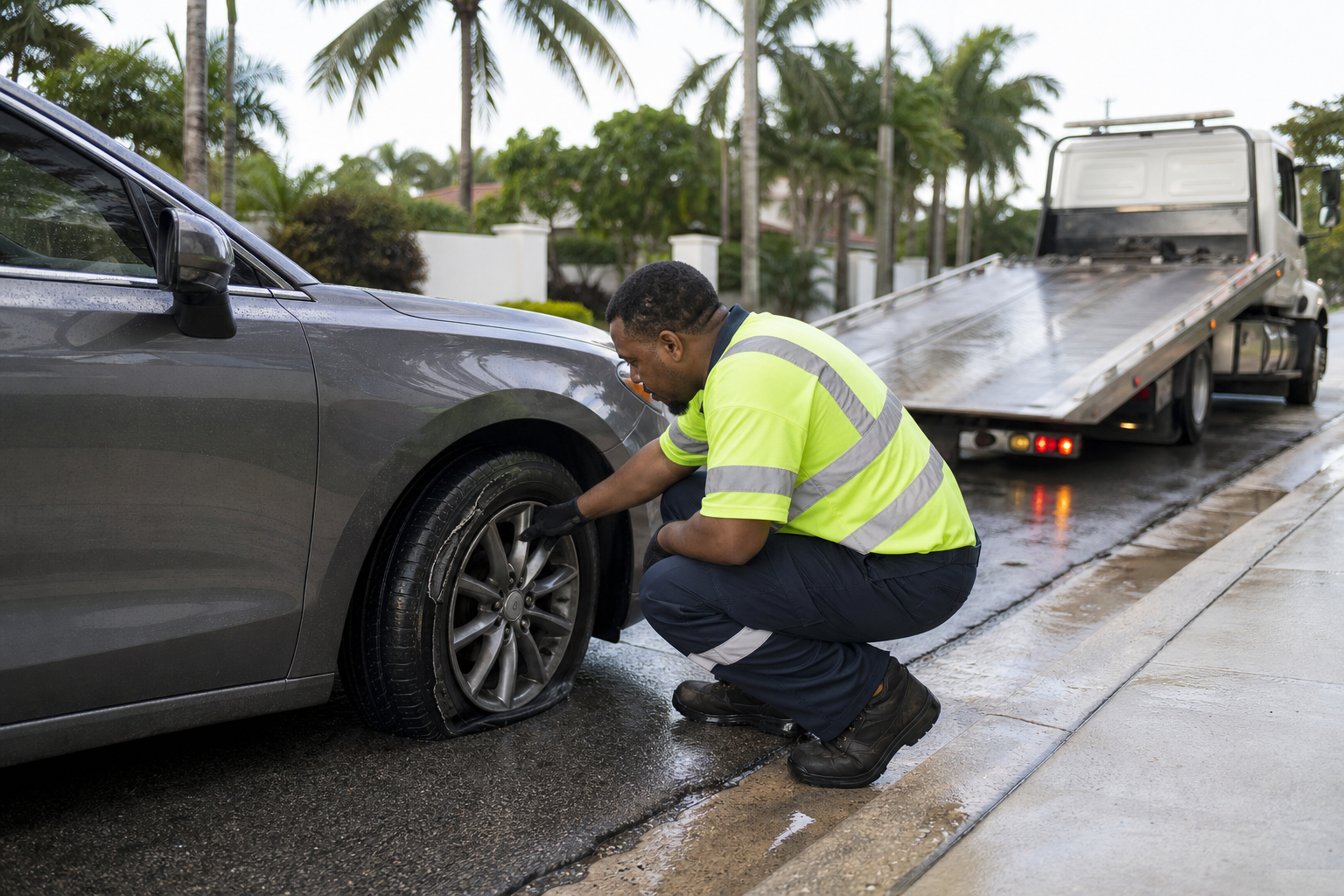
The tire looks low, the steering has started pulling, or a steady thump is coming from one corner of the vehicle. Once you are stopped, the key question is not simply, “Is the tire flat?” It is: Where is the damage, and has the tire already lost the ability to support the vehicle safely?
A puncture through the main tread may be repairable after professional inspection. Damage to the sidewall or shoulder is a different risk because those areas flex and carry load. If the sidewall is cut, bulging, cracked, or crushed from being driven while flat, continuing to drive can turn a tire problem into wheel or vehicle damage.
Before the problem: recognize the two damage zones
The tread is the patterned surface that contacts the road. The sidewall is the smoother, more flexible area between the tread and wheel. The shoulder is the rounded transition where the outer tread meets the sidewall.
Quick risk comparison
| What you see | Likely decision | Why |
|---|---|---|
| Small object in the central tread, tire still holding pressure | Stop using the tire until it can be evaluated; roadside help may be enough if a usable spare is available | Some central tread punctures can be professionally repaired, but appearance alone cannot confirm internal condition |
| Puncture near the tread edge or shoulder | Do not treat it like a routine center-tread puncture | The area flexes heavily and may not be safely repairable |
| Cut, split, exposed cords, or missing rubber on the sidewall | Do not drive on that tire | Sidewall structure may be compromised |
| Bubble or bulge in the sidewall | Do not drive; arrange roadside assistance or towing | A bulge can indicate internal separation even if air remains in the tire |
| Tire completely flat or separated from the wheel | Do not move the vehicle except to escape an immediate hazard | Driving can damage the tire, wheel, and nearby components |
Keep a usable spare, wheel-lock key, jack, and lug tool together if your vehicle is equipped for a tire change. Some vehicles carry an inflator kit instead of a spare, but sealant is not a solution for a torn sidewall, a bulge, a tire off the rim, or obvious wheel damage.
At the roadside: stop first, classify the damage second
If the vehicle begins pulling, vibrating, thumping, or showing a tire-pressure warning, reduce speed smoothly and find the nearest location where you can stop away from moving traffic. Avoid hard steering and sudden braking. Once parked, switch on the hazard flashers and remain aware of approaching vehicles.
Check only from a safe position
- Look for a screw, nail, or other object in the central tread.
- Inspect the visible sidewall for a cut, bubble, scrape, exposed reinforcement, or pinched area.
- Check whether the tire has separated from the wheel rim.
- Look at the wheel for bending or cracking without reaching under the vehicle.
- Notice whether more than one tire is damaged.
- Do not crawl beside the vehicle or stand in a traffic-facing area to complete an inspection.
Do not pull an embedded object from the tread. Removing it can accelerate air loss. Do not judge safety by air pressure alone, either: a sidewall bulge or deep cut can be dangerous while the tire still appears inflated.
When a tread puncture still means “do not drive”
Location is only one part of the decision. Do not continue on a tread puncture if the tire is losing pressure, the vehicle is pulling or vibrating, the puncture is near the shoulder, multiple objects are present, or the tire was driven while severely underinflated. Internal damage is not always visible from outside.
South Florida heat adds to the concern because a low tire flexes and builds additional heat as it rolls. Adding air does not reverse structural damage caused by driving underinflated. If pressure drops again or handling feels abnormal, stop and use flat tire service rather than attempting to stretch the trip.
When not to change the tire yourself
A spare tire can resolve a straightforward tread puncture, but only if the vehicle is in a stable, sufficiently separated location and you have the correct equipment. Call for help if:
- The ground is sloped, soft, flooded, or uneven.
- The damaged tire faces passing traffic.
- Heavy rain limits visibility or makes the jack position unstable.
- The lug nuts will not loosen with the supplied tool.
- The spare is missing, visibly damaged, or low on air.
- The vehicle has wheel or suspension damage.
- You cannot identify a manufacturer-approved lifting point.
While waiting: prevent a tire problem from becoming a roadside injury
Tell the dispatcher whether the damage is in the tread, shoulder, or sidewall; whether the tire is fully flat; whether a spare is present; and whether the vehicle can roll and steer. Mention any impact, wheel damage, or unusual noise. These details help determine whether to send tire-change equipment or a tow truck.
- Keep the vehicle stationary unless remaining there creates a more immediate danger.
- Leave the parking brake set and keep the hazard flashers on.
- Stay in a protected location based on the conditions around you; do not stand near the damaged wheel.
- Gather the wheel-lock key and spare-tire tools, but do not place them in the roadway.
- Keep pets and passengers away from traffic and towing activity.
- In heavy rain, prioritize shelter and visibility over taking close-up tire photos.
Do not use aerosol sealant on a sidewall opening or attempt to bind a split with tape or another temporary material. Do not place a jack under the vehicle merely to make the technician’s work faster. The responding professional should evaluate the surface and lifting position.
After service arrives: choose the solution by damage, not convenience
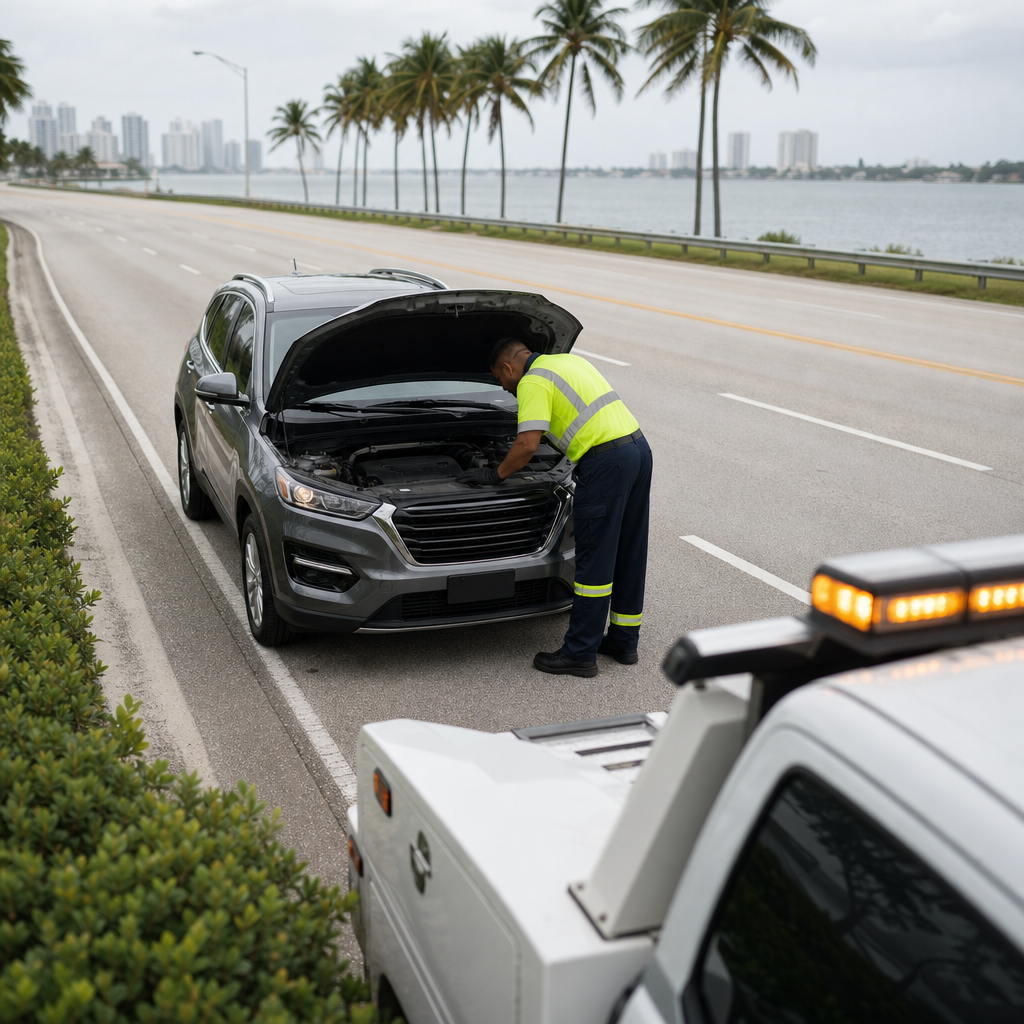
Roadside service may install a usable spare when the vehicle, wheel, work area, and equipment allow it. A spare is a temporary mobility solution, not confirmation that the damaged tire can be repaired. Follow the spare tire’s markings and the vehicle manufacturer’s instructions regarding speed, distance, and inflation.
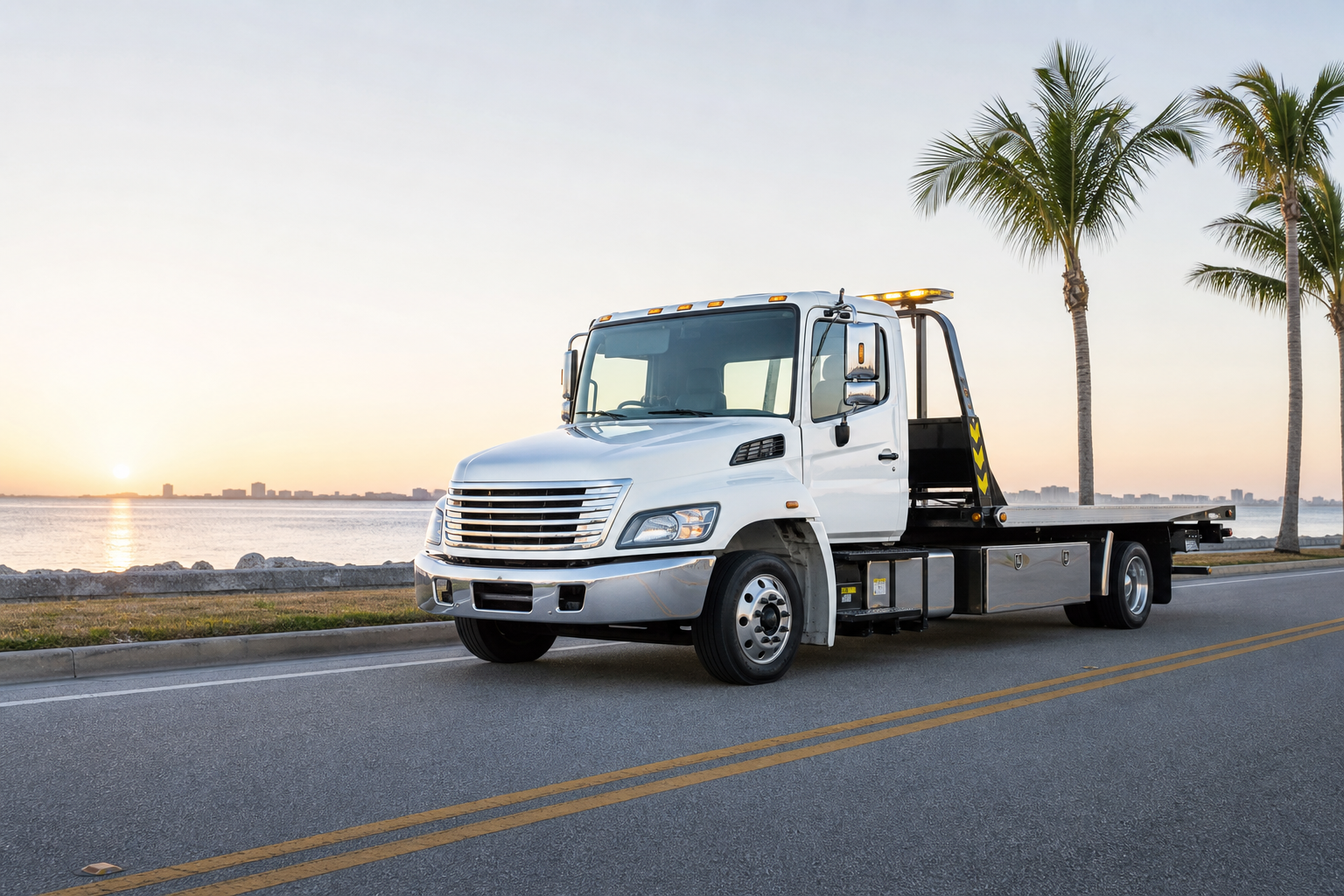
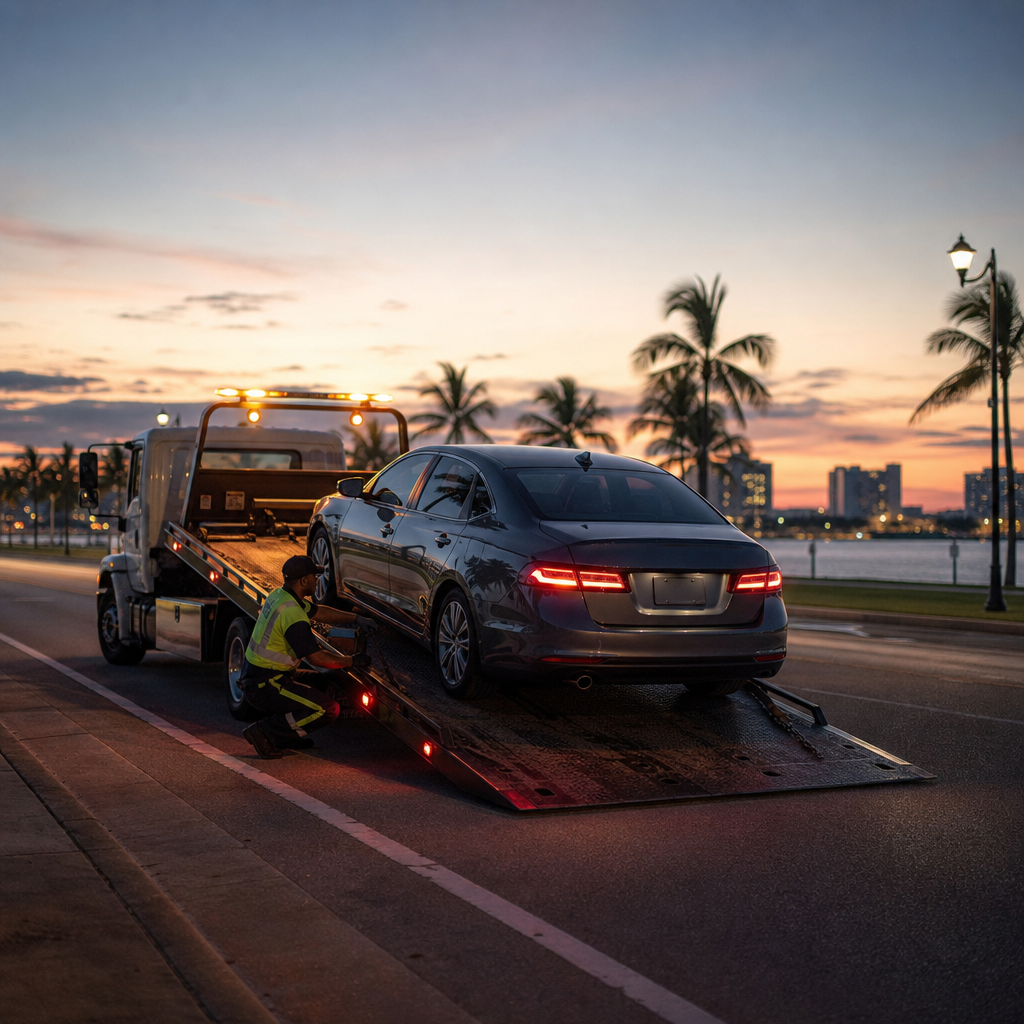
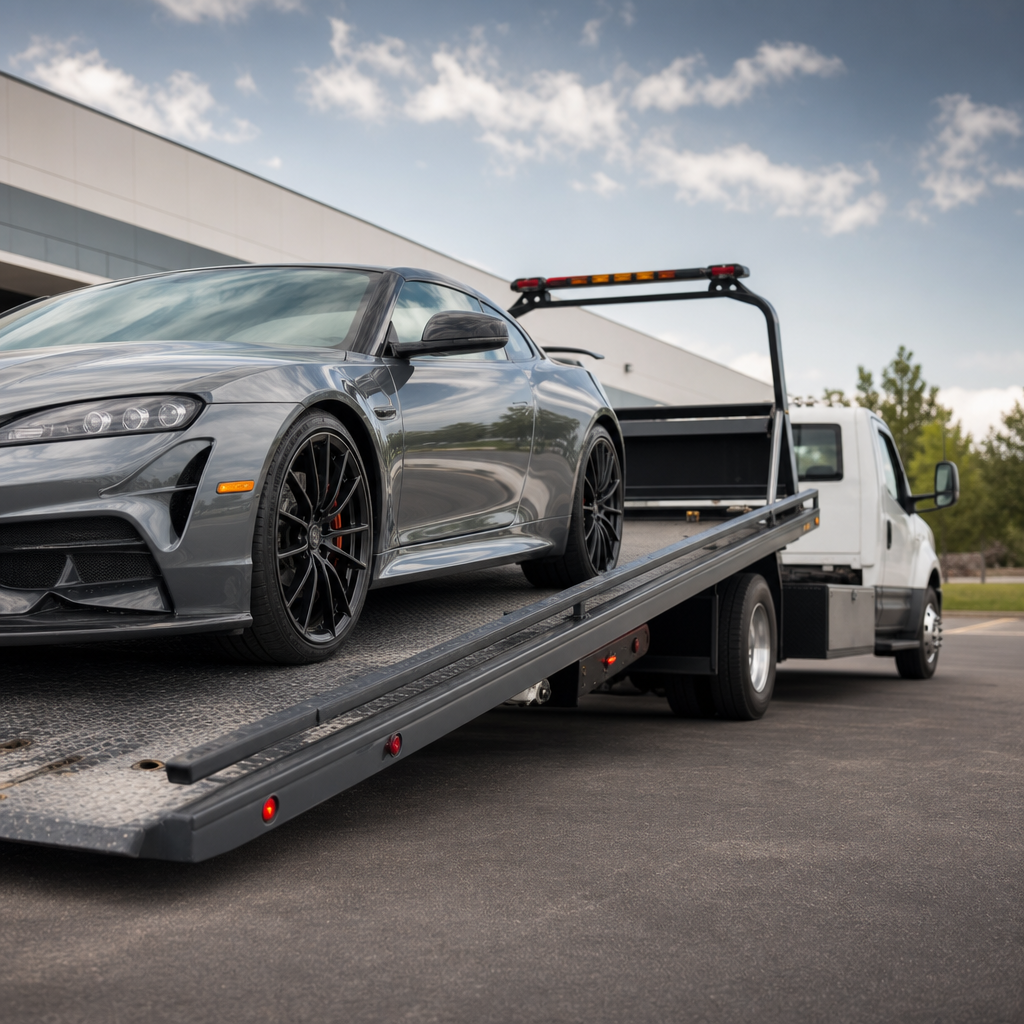
Towing is the better decision when there is no serviceable spare, the wheel is damaged, more than one tire is affected, the tire will not remain seated on the rim, or the vehicle cannot be lifted safely at the roadside. A flatbed tow may also be appropriate when the vehicle should not roll or its loading requirements call for full support.
At the tire facility, explain whether the tire was driven while low or flat, whether there was an impact, and whether vibration or pulling occurred. A technician should inspect the interior before deciding that a tread puncture is repairable. Sidewall and shoulder damage commonly requires tire replacement rather than a puncture repair.
Make the call based on what you see
Choose roadside assistance when there is one damaged tire, the vehicle is safely positioned, and a suitable spare can likely be installed. Choose towing when you see sidewall damage, a bulge, wheel damage, multiple flat tires, no usable spare, or any condition that prevents a safe roadside change. If you cannot safely inspect the tire, treat the damage as unknown and request emergency towing help rather than testing it by driving.
Frequently asked questions
Can I drive a short distance with sidewall damage?
No distance should be considered safe when the sidewall is cut, bulging, exposing cords, or unable to hold the vehicle normally. Stop and arrange a spare installation or tow.
Is a nail in the tread always repairable?
No. Repairability depends on the puncture’s location and extent, the tire’s condition, and whether it was driven underinflated. Leave the object in place and have the tire inspected internally.
Can a tire inflator kit fix a sidewall cut?
No. Inflator kits are not structural repairs and should not be relied on for sidewall cuts, bulges, shoulder damage, a separated bead, or a damaged wheel.
Should I request a tire change or a tow in West Palm Beach?
Request a tire change when you have one straightforward flat, a safe work area, and a usable spare. Request towing when the sidewall or wheel is damaged, no safe spare is available, the vehicle cannot roll normally, or heat and rain conditions make roadside work unsafe.